
by Michael Marder, Executive Director
If you have any doubt about the importance of scientific innovation in your life, glance down at your phone. It draws on decades of work on esoteric theories of matter, space, and time to provide communication, connections, and information previous generations could not even dream possible. We are hurtling toward new revolutions driven by artificial intelligence, biotechnology, quantum computing, and other advances.
Will the U.S. find itself among those driving the scientific and technological revolutions? That is up to us. Our technology sectors have been growing exponentially, but we are no longer producing enough high-skill STEM workers to meet the need.1 By 2034, the United States will have millions fewer young high-skill STEM workers than the country’s workforce will require. Why is this happening?
The STEM Teacher Shortage Means Fewer Advanced STEM Courses in High Schools
The simplest answer is that more than a decade ago, the U.S. stopped preparing enough high school teachers, and the shortages mean students are not taking key courses that engage them and ready them to study high-level STEM subjects and participate in the STEM workforce. The single clearest barometer is calculus.
High school calculus is required for admission to many undergraduate engineering programs. Taking high school calculus can signal a student’s serious intention to pursue a STEM career and give them a foundation for college-level calculus, which is a non-negotiable requirement for most undergraduate STEM majors. Students who do not take calculus in high school have only about a 16% chance of becoming a STEM major in college.2 Monitoring calculus participation provides a preview of how many U.S. students are on the cusp of STEM careers.
From 1990 through 2016, the number of U.S. students taking high school calculus rose steadily. And then, without fanfare, the number began to drop (see Figure 1). By 2022, it had dropped from 700,000 to 600,000. If you wonder if increases in students taking statistics or computer science compensate for this drop, which one might argue better prepare them for the future, the answer is no. U.S. education is pulling back from advanced STEM preparation just as we become increasingly dependent upon it.
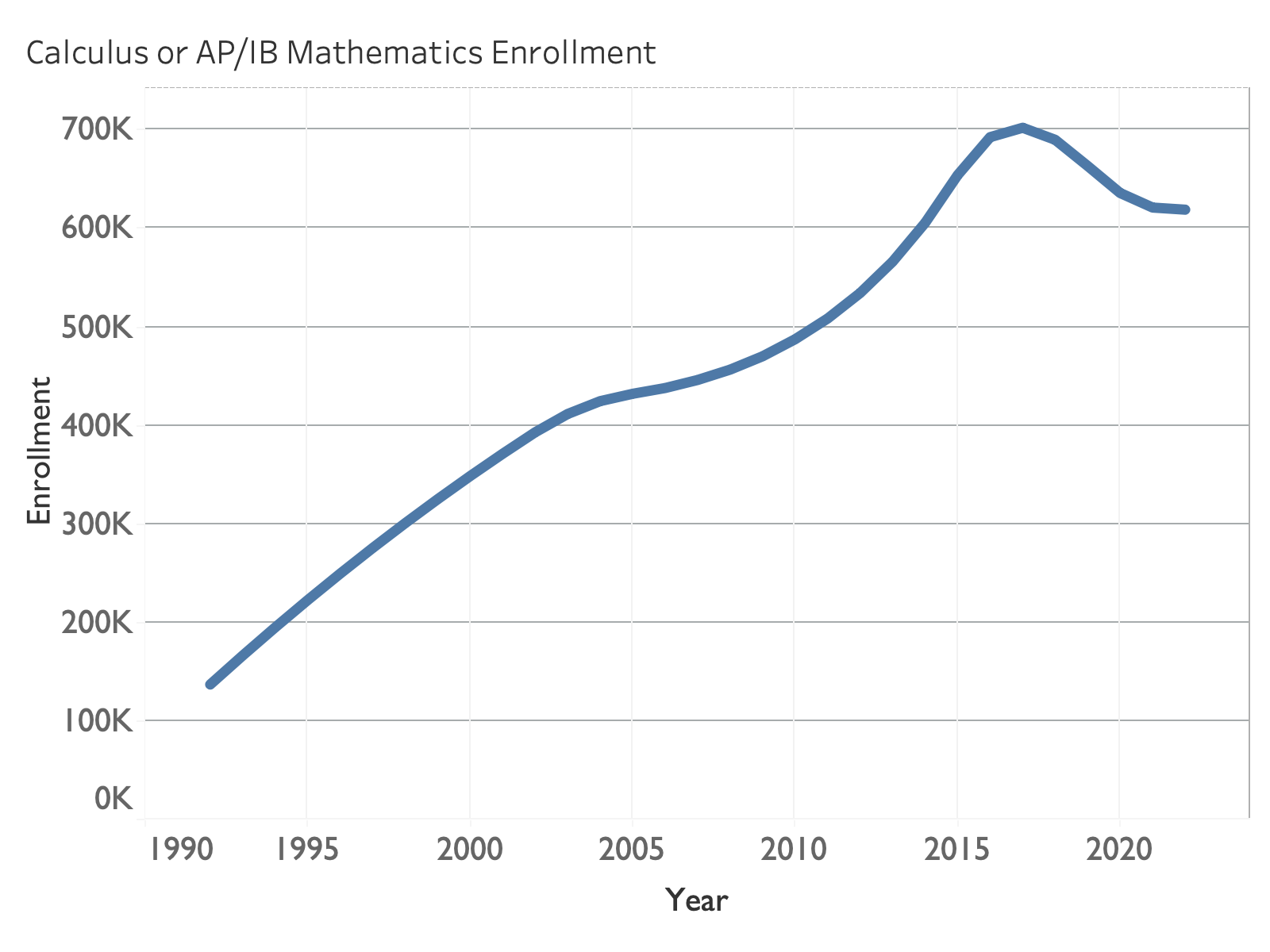
Figure 1: STEMM pipeline pool for the young high-skill STEMM workforce. Civil Rights Data Collection.
Why is this happening? It is hard to be sure, but one important factor is a shortage of qualified STEM teachers in American public schools. Figure 2 shows that the number of people completing STEM teaching programs in the U.S. has dropped steadily since 2011, and by 2022 it was down by about 40%. Eventually this affected student STEM education opportunities. We illustrate this in Figure 3, which compares the number of math teaching certificates issued each year with the number of new individuals hired to teach mathematics.
After 2016, the country’s teacher preparation programs no longer provided enough mathematics teachers to meet schools’ needs, and schools had to choose between putting well-prepared teachers into high-stakes courses such as Algebra and putting them into more advanced courses. It is probably not a coincidence that, at this same time, the number of U.S. high school students given the opportunity to take calculus began to drop.
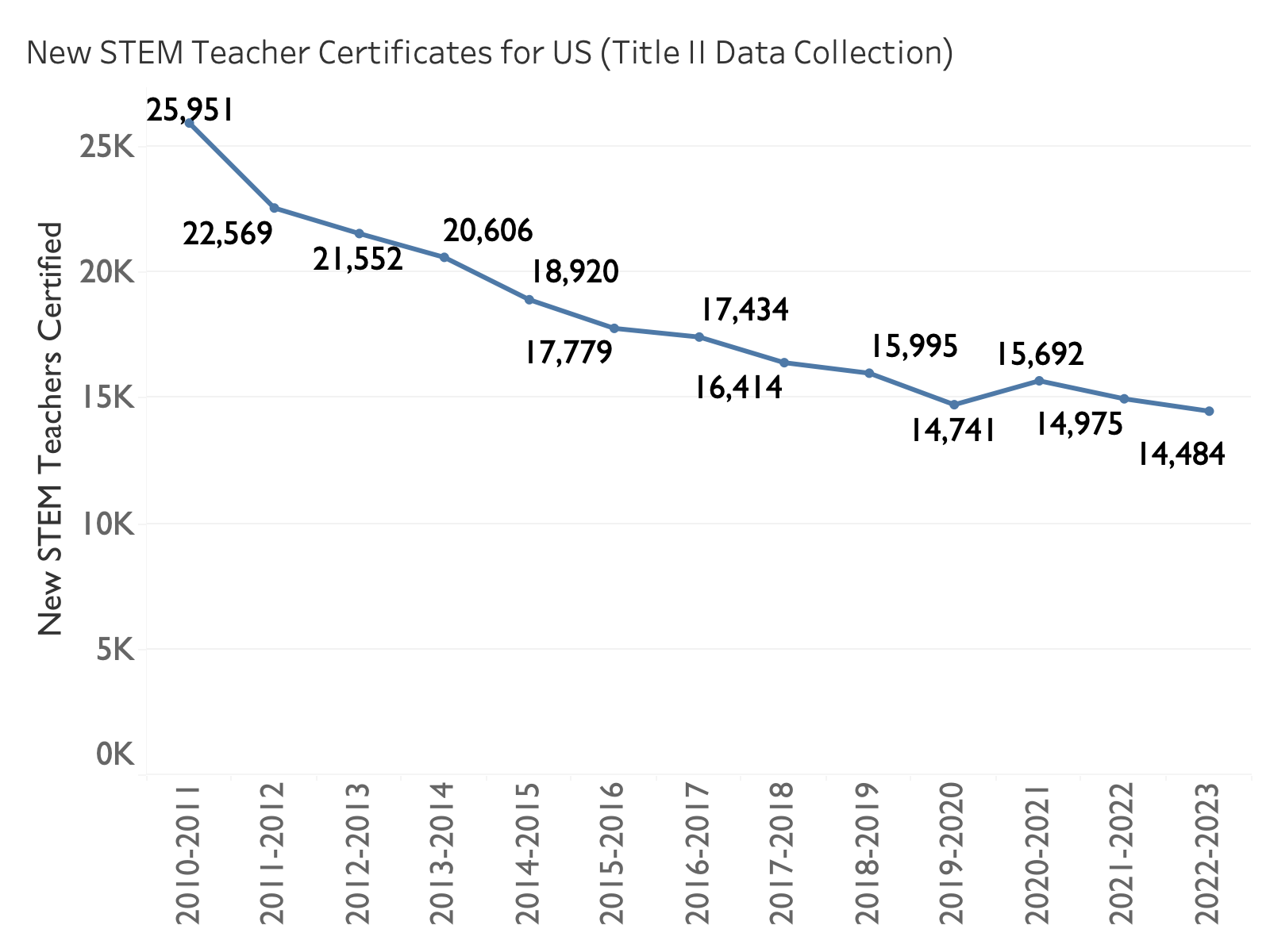
Figure 2: New STEM teacher certificates in the U.S. Title 2 data collection.
In 2022–2023, the gap between mathematics teachers needed and mathematics teachers provided was over 2,000 a year.
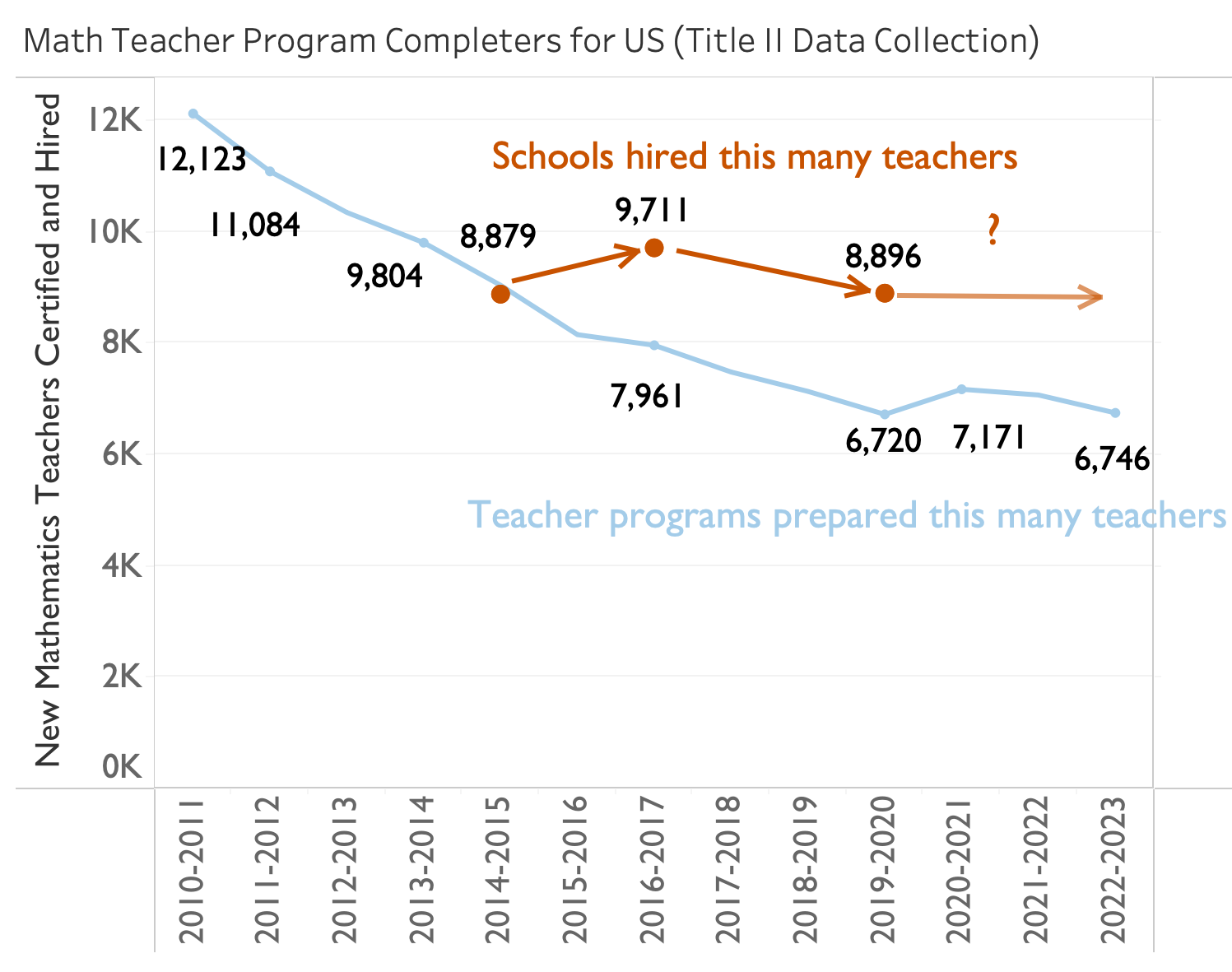
Figure 3: Number of mathematics certificates issued per year in the United States vs the number of teachers listing mathematics as their primary content area
Another part of the human structure that holds up our STEM economy is weakening as well. Around 20% of the young high-skill STEM workforce has been made up of people born abroad, mainly coming through graduate programs. International students are finding it more difficult and costly to obtain visas to study in the U.S. It is early to say what the full impact will be, but visas for students pursuing master’s degrees in STEM have already declined 10% in early 2026 from a year before.
Now the full extent of the problem comes into view. Demand for high-skill STEM workers in the U.S. has been rising at more than 4% per year, but both the pool of STEM-ready high school students and the flow of international talent through U.S. STEM graduate programs is declining. The advancement of STEM technology is unlikely to stop, and the U.S. will not be at the forefront.
Course Correction
The STEM workforce debate is usually framed around employers, certificates, college majors, and immigration. All of those matter. But workforce capacity is built much earlier, and much more slowly, through the ordinary structures of schooling. Students who reach advanced mathematics and science do so because schools made those opportunities available and because teachers were there to guide them. A shortage of well-prepared 18-year-old high school graduates today is the shortage of 30-year-old STEM workers 12 years later.
So what do we need to do? The good news is that the scale of our national problem in STEM education calls for a course correction, not a revolution. Every year we prepare 2,000 fewer well-prepared mathematics teachers than the schools hire. So first, we need to increase the number of new mathematics teachers by around 2,000 per year; this will get us back into balance. Next, to expand access to advanced coursework, we need to increase the overall number of mathematics teachers in service by around 2,000 through professional development and retention efforts. Similar increases in teacher preparation and retention are needed across the STEM disciplines, particularly computer science and physics.
Returning to STEM teacher production numbers from a decade ago would provide enough teachers to improve student access to the full range of STEM coursework and ensure high engagement and quality preparation for STEM workforce opportunities.
Much still needs to be done to strengthen the supply of well-prepared STEM teachers, but this is not an insurmountable problem. We have tremendous untapped potential we can leverage across our higher education system. Hundreds of state colleges and universities across the U.S. were originally founded with the mission to prepare teachers. Even if this is no longer their primary aim, they have the capacity to meet the current challenge. We have innovative models and approaches ready to scale. Preparing and supporting STEM teachers is a specific and unavoidable way that universities can make the future brighter for themselves and for the entire country.
Read the full technical paper.
High-skill STEM workers are defined as people aged 22–31 with a BA or more working in science, technology, engineering, mathematics, or medicine.
Figure 3 represents the number of mathematics certificates issued per year in the United States, 2010–2011 through 2022–2023 and the number of all teachers listing mathematics as their primary content area in their first year for three selected years. Data from Title II data collection and from the National Teacher and Principal Survey.
Subscribe to our newsletter for updates on our work and how to get involved.